Moving into a Brooklyn building can feel like a project inside the project. You have the keys, the boxes, and the movers, but the building’s rules can make or break your day. If you plan ahead, you can avoid costly surprises, denied access, or last‑minute rescheduling.
This guide walks you through what most Kings County buildings expect: move windows, elevator reservations and protections, insurance and COIs, typical fees and deposits, and NYC street logistics. You will see what varies by co‑op, condo, and rental, plus a practical timeline and checklist to keep everything on track.
Let’s dive in.
How building type shapes your move
Building rules are set by co‑op boards, condo associations, management companies, and landlords. City rules govern safety and streets, but day‑to‑day move protocols are building‑level.
- Co‑ops are usually the strictest. Expect a move application, possible board approval, standard move‑in packets, higher COI limits, and both refundable and nonrefundable fees. Some maintain approved mover lists.
- Condos are often more flexible than co‑ops but still require a COI and elevator reservations. Rules come from the condo association or the management team.
- Rental buildings, especially high‑rises, tend to have standardized policies. You still book the elevator, provide a COI, and follow staff directions. Smaller rentals may be more informal but still expect proof of insurance and basic protections.
Always ask management for the written move policy as soon as your lease is signed or your closing is scheduled.
Scheduling rules and timing
Most Brooklyn buildings limit moves to weekday business hours. Expect 9:00 AM to 5:00 PM or 9:00 AM to 4:00 PM windows. Some properties set mid‑day periods, like 10:00 AM to 3:00 PM, to reduce elevator conflicts.
Weekend or holiday moves are often prohibited or require extra approvals, added staffing, and higher fees. After‑hours access usually needs special permission and a building representative on site, which can add cost.
For reservations, plan ahead. Typical lead times are 1 to 2 weeks in smaller buildings and 2 to 6 weeks in larger or luxury properties and during peak months, especially June through September. Elevator blocks are commonly reserved in 1 to 3 hour increments. Overtime charges may apply if you run long.
Pro tip: Book more time than you think you need to allow for traffic, elevator return trips, or stair carries.
Elevators, routes, and protections
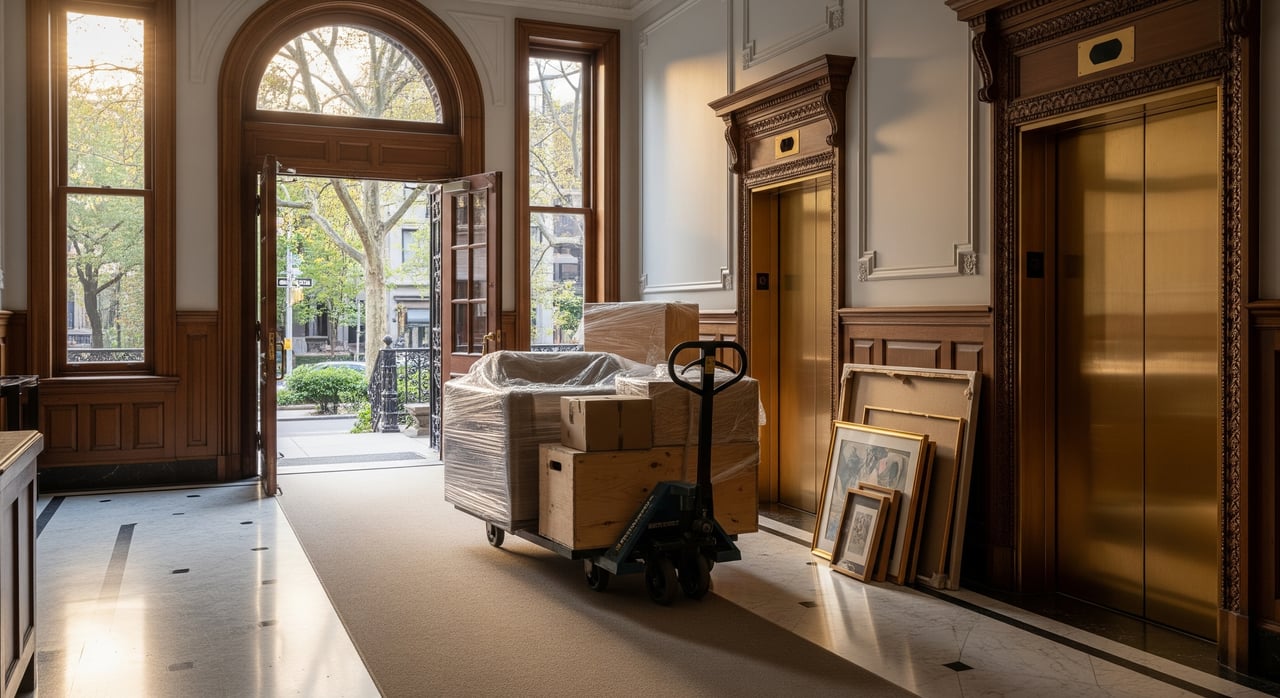
If your building has a freight or service elevator, you will likely be required to use it. If the building only has passenger elevators, the move usually requires full padding and floor protection, and sometimes an operator. Many buildings will not allow large items through the main lobby without protection.
Common requirements include:
- Full padding of elevator walls and floors.
- Floor runners and corner guards for hallways.
- Specific paths for movers, such as service corridors or loading docks.
- Prior approval for oversized items like pianos or unusually large furniture.
Confirm who supplies and installs protective materials. Some buildings expect your mover to bring pads and runners, while others provide them for a fee. Ask whether a superintendent, concierge, or elevator operator must be present during your time slot.
Insurance and COIs you will need
Most buildings require a Certificate of Insurance from your mover before confirming your reservation. Typical requests include:
- Commercial General Liability of $1,000,000 to $2,000,000 per occurrence, with any specified aggregate limits.
- Workers’ Compensation and Employers’ Liability for the mover’s employees.
- Automobile Liability, often $1,000,000 combined single limit for vehicles on site.
- Cargo or valuation coverage for household goods.
- Additional Insured endorsements naming the building owner, association, and management company. Some buildings require primary and noncontributory language and a waiver of subrogation.
Submit the COI early. Many buildings require a current COI 7 to 14 days before your move, and some luxury properties ask for 30 days. Incorrect names, expired dates, or missing endorsements are common reasons moves get denied at the door.
If you are moving across state lines, verify the mover’s federal registration and household‑goods credentials. For local moves, request a written estimate, proof of insurance, and a contract that clearly states valuation coverage and the claims process.
Fees, deposits, and what they cover
Expect a mix of refundable and nonrefundable charges. The amounts vary by building and building type.
- Nonrefundable administrative or move fee: typically $50 to $500, often $100 to $300.
- Refundable security or damage deposit: typically $250 to $2,000, with many buildings in the $500 to $1,500 range. Luxury properties can be higher.
- Elevator reservation fee: sometimes a flat $50 to $500 or bundled into other charges.
- Overtime and off‑hour surcharges: often 1.5 to 2 times standard rates or a set weekend/holiday fee.
- Damage charges: billed for actual repair costs if any occur.
Before move day, ask management for a written breakdown of all fees, deposit conditions, how damage is evaluated, and when refunds are processed after the post‑move inspection.
Street parking and NYC logistics
Brooklyn’s curbside rules are actively enforced. Plan for legal loading and do not assume double‑parking is acceptable. If your mover needs a specific curb space or a temporary no‑parking zone, discuss permit options in advance. Some locations and time windows require special coordination.
Check the size of the truck against your building’s street and garage clearances. Narrow streets and tight entries may limit truck size, which can affect timing and costs. In many neighborhoods, you will need to feed meters and schedule arrival to avoid tickets.
Your mover should map the route, confirm legal loading zones, and plan for a backup location if the first option is taken.
A simple move‑in timeline
Use this planning sequence to protect your date and budget.
4 to 6 weeks out
- Ask management for the written move policy, fee schedule, deposit terms, and COI template.
- If applicable, begin any co‑op or condo move application and request your preferred date.
- Select your mover and confirm they can meet the building’s COI requirements.
2 to 4 weeks out
- Reserve the elevator and loading dock for your date and time block.
- Confirm who provides elevator padding and hallway protection.
- Start the COI process with your mover, including Additional Insured language.
7 to 14 days out
- Submit the COI for approval and confirm all entity names and addresses are correct.
- Request written confirmation of your reservation, staffing, and fees.
- Review street logistics with your mover, including any needed permits.
3 to 5 days out
- Reconfirm elevator time, building access, and superintendent or staff presence.
- Share building contacts and delivery route instructions with your mover.
- Verify truck size and parking plan.
Move day
- Arrive early and install protections before the first load.
- Keep a copy of approvals and the COI on hand.
- After unloading, walk the path with building staff for the damage check and sign‑off.
After the move
- Confirm when your deposit will be returned and in what form.
- Keep mover paperwork and photos in case a claim is needed.
Quick checklist
From the building
- Written move policy, fee schedule, and deposit terms
- COI template and required Additional Insured names
- Allowed move days and hours, elevator reservation steps
- Elevator and hallway protection expectations and who supplies them
- Procedure for oversized items and any special equipment
- Contact person and required lead time
From your mover
- COI with required limits, endorsements, and dates
- Written estimate plus valuation or cargo coverage details
- References for Brooklyn building moves
Day‑of confirmations
- Elevator reserved and building representative present
- Truck placement and any permits arranged
- Damage inspection protocol and who signs the completion form
Avoid common mistakes
- Booking a mover before you see the building’s COI template and insurance limits
- Underestimating your elevator block and triggering overtime fees
- Assuming weekend or holiday access without written approval
- Forgetting that double‑parking risks tickets and delays
- Trying to move oversized items without prior approval or measurement
Final thoughts
A smooth move‑in in Kings County comes down to timing, insurance, and coordination. Secure your elevator window early, get the COI right the first time, and plan street logistics with your mover. With the building’s requirements clear and the right team in place, your first day in your new home can be efficient and stress‑light.
If you are preparing for a Brooklyn or Manhattan purchase, sale, or lease and want an organized path from contract to move‑in, let’s talk. Unknown Company. Let’s Connect.
FAQs
What are typical weekday move windows in Brooklyn buildings?
- Most buildings allow moves during business hours, often 9:00 AM to 5:00 PM or 9:00 AM to 4:00 PM, with some mid‑day limits like 10:00 AM to 3:00 PM.
How far in advance should I reserve the elevator for my move?
- Plan 1 to 2 weeks ahead for smaller buildings and 2 to 6 weeks or more for larger or luxury properties and peak summer months.
What insurance does my mover need for a Brooklyn building?
- Expect a COI with General Liability of $1,000,000 to $2,000,000, Workers’ Compensation, Automobile Liability, and Additional Insured endorsements as specified by the building.
Are weekend or after‑hours moves allowed in Kings County?
- Many buildings restrict weekends and off‑hours or require extra approvals and fees; confirm in writing before you book.
How much are typical move fees and deposits?
- Nonrefundable fees often run $50 to $500; refundable deposits commonly $250 to $2,000, with many buildings in the $500 to $1,500 range.
Can my move be denied if the COI is wrong or late?
- Yes. Buildings can refuse access for expired COIs, missing endorsements, incorrect entity names, or late submissions.