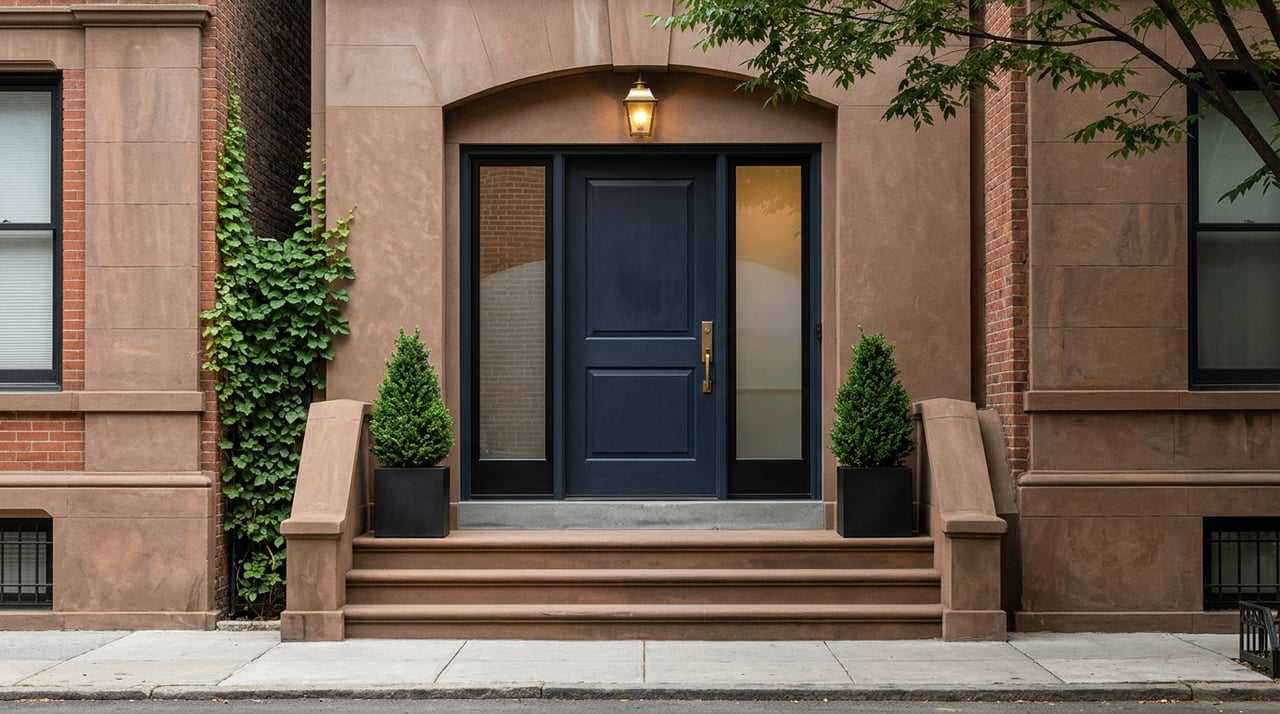
If you are planning to build a rental property portfolio in Brooklyn, one big mistake can cost you years of returns: treating the borough like one market. Brooklyn is active, competitive, and full of opportunity, but it is also highly varied block by block, asset by asset, and neighborhood by neighborhood. When you understand how vacancy, building size, regulation, and holding period work together, you can build a portfolio with more clarity and less guesswork. Let’s dive in.
Start With Brooklyn’s Supply Reality
Brooklyn remains a tight rental market. In the 2023 New York City Housing and Vacancy Survey, Brooklyn’s net rental vacancy rate was 1.27%, which came in below the citywide rate of 1.41%.
That matters because low vacancy can support demand, but it should not push you into overly optimistic underwriting. In a constrained market, even small shifts in leasing timing can affect cash flow, especially when you are planning across multiple units or properties.
There is also an important wrinkle in the current supply picture. StreetEasy’s June 2026 update reported that Brooklyn was the only borough with a noticeable year-over-year increase in rental inventory, up 2.2%, even as the citywide median asking rent reached $4,200.
The key takeaway is simple: demand is still strong, but inventory conditions are not static. If you are building a portfolio, it helps to plan for a competitive market while keeping vacancy and rent-growth assumptions disciplined.
Think in Asset Types, Not Just Unit Counts
A Brooklyn rental portfolio can take many forms. Condos, townhouses, and small multifamily buildings can all play a role, but they do not behave the same way.
Condo Rentals Are Part of the Market
In New York City, condo and co-op buildings are a meaningful part of the housing stock. The 2023 survey found 861,200 occupied units in condo or co-op buildings, and 60% of condominiums were renter-occupied.
That is an important point for investors who are considering high-value condo acquisitions in Brooklyn. Condo rentals are not a fringe strategy here. They are a normal part of the city’s rental ecosystem and can make sense in a portfolio that values flexibility, lower building-scale operating complexity, or easier entry points than larger multifamily assets.
Three-to-Five Unit Buildings Offer a Useful Middle Ground
For many investors, 3-5 unit properties are one of the clearest small-portfolio building blocks. The city survey found that buildings with 3-5 units were 81% renter-occupied, compared with 55% of two-unit buildings and 99% of buildings with six or more units.
That makes small multifamily especially useful if you want something between a single condo rental and a larger apartment building. You may gain more rental concentration under one roof while still staying in a more approachable scale than a bigger institutional-style asset.
Townhouse-Style Inventory Can Support Larger Unit Demand
Brooklyn also stands out for larger homes and larger units. The borough had 348,800 units with three or more bedrooms, representing 31% of its housing stock.
Larger units are especially common in smaller buildings. In 1-2 unit buildings, 64% of units had three bedrooms or more.
For portfolio planning, this supports a different lens on townhouses and smaller residential buildings. They are not only lifestyle properties. In the right setting, they can also function as rental assets that align with demand for larger unit layouts.
Avoid Treating Small Multifamily as One Category
It is easy to lump all apartment buildings together, but Brooklyn’s numbers argue against that. The 2026 Rent Guidelines Board Income and Expense Study reported different 2024 rent, income, and cost profiles across building sizes in Brooklyn, including separate figures for 11-19 unit, 20-99 unit, and 100+ unit properties.
That means your underwriting should reflect the actual scale of the asset you are considering. A walk-up, a mid-size rental building, and a larger apartment property can have meaningfully different operating patterns.
If you are shaping a portfolio, it helps to define each asset’s role clearly. One property may offer simpler ownership and resale flexibility. Another may offer stronger income concentration. Another may bring more regulation, more reporting, or a different cost structure.
Build Around Brooklyn’s Micro-Markets
One of the most important ideas in Brooklyn portfolio planning is that the borough is really a collection of micro-markets. Borough-wide averages can be useful for context, but they are not enough for acquisition strategy.
Neighborhood Performance Can Vary Sharply
The 2026 RGB Income and Expense Study showed wide differences across Brooklyn community districts. In 2024, rent-change figures ranged from -0.1% in Brownsville/Ocean Hill to 7.6% in Williamsburg/Greenpoint.
Net operating income trends also varied. NOI changes ranged from 0.6% in Bensonhurst to 13.3% in Brownsville/Ocean Hill and 12.2% in East New York/Starrett City.
For you as an investor, this supports a practical lesson: diversification inside Brooklyn can matter just as much as diversification across asset types. Owning everything in one submarket may leave your portfolio too exposed to one local trend.
Regulation Exposure Also Changes by Area
Neighborhood selection is not only about rent levels or momentum. It can also shape your regulatory exposure.
According to NYU Furman Center’s 2025 report, rent-stabilized units are unevenly distributed across the city. In Brooklyn, Flatbush/Midwood and South Crown Heights/Lefferts Gardens stood out, with stabilized units making up roughly half of each district’s housing stock.
That does not make those areas good or bad for investment on its own. It simply means the regulatory profile may differ significantly from one part of Brooklyn to another, and your portfolio plan should account for that before you buy.
Understand Rent Stabilization Before You Scale
If your portfolio may include older apartment buildings, rent stabilization needs to be part of your planning from the beginning. In New York City, this is not a niche issue.
The latest official research shows that the city’s rent-stabilized stock remains large, with about one million dwelling units subject to rent stabilization. The 2023 survey also found a 0.98% vacancy rate within stabilized stock.
New York State Homes and Community Renewal states that NYC rent stabilization generally applies to buildings of six or more units built between February 1, 1947 and December 31, 1973, along with certain pre-1947 units and some post-1974 units with special tax benefits.
Owners of rent-stabilized buildings must file initial and annual building registrations with HCR. New York City HPD has a separate property registration requirement, and HPD states that building registrations must be filed annually or when ownership changes. HPD also notes that rent-stabilized buildings must register with HCR by July 31 each year.
This is one reason a portfolio plan should separate asset types carefully. A six-plus-unit building may look attractive on paper, but your operating obligations and rent-growth assumptions may be very different from those of a condo or smaller non-stabilized property.
Lease Guidelines Affect Income Planning
For stabilized units, rent growth is not purely a market question. It is also policy-driven.
Rent Guidelines Board Order #58, adopted on June 25, 2026, set 0% increases for both one-year and two-year apartment and loft leases commencing from October 1, 2026 through September 30, 2027.
If you are modeling a portfolio that includes stabilized assets, current lease guidelines should feed directly into your return assumptions. This is especially important if you are comparing stabilized buildings with condo rentals, townhouses, or other property types that may behave differently.
Plan for a Longer Hold Period
Brooklyn rental portfolios often reward patience. One reason is the cost of getting in and out of the market.
New York State imposes real estate transfer tax when consideration exceeds $500. The state also imposes an additional 1% mansion tax on residential conveyances of $1 million or more, and the state publication makes clear that the grantee pays that additional tax.
NYC Finance also notes that city mortgage recording tax applies to recorded mortgages in the boroughs, with combined state and city mortgage recording tax rates depending on mortgage amount.
In practical terms, these transaction costs can make quick-turn ownership less efficient. A longer hold period may give you more time to spread acquisition and financing friction across years of rental income rather than trying to force short-term results.
Watch the New-Development Pipeline Carefully
If part of your strategy involves new development or recently delivered product, it is worth understanding how Brooklyn’s pipeline has evolved. The 2025 NYU Furman Center housing-stock report found that citywide completions rose to 39,073 in 2025, the highest annual total since tracking began in 2010.
Nearly 85% of those completions were in buildings with 50 or more units, while fewer than 1,000 units were completed in 1-4 unit buildings. For many investors building a small-to-mid-sized Brooklyn portfolio, that suggests much of the tradable opportunity may still sit in existing stock rather than in newly built small properties.
The regulatory backdrop for new supply also matters. The Rent Guidelines Board’s 2024 stock report notes that 421-a was replaced in April 2024 by the new 485-x incentive program, and Brooklyn accounted for 27% of 2023 units added to stabilized stock through 421-a.
That mix of legacy stock, tax-incentivized development, and varying regulatory profiles is one more reason to avoid broad assumptions. Newer does not always mean simpler, and older does not always mean inferior. The right fit depends on your portfolio goals, timeline, and tolerance for operational complexity.
A Smarter Brooklyn Portfolio Framework
If you are planning a Brooklyn rental portfolio, a useful framework is to make decisions in three layers:
- Asset mix: Decide how condos, townhouses, and small multifamily properties each fit your strategy.
- Neighborhood mix: Spread risk across Brooklyn micro-markets rather than relying on one local thesis.
- Hold period: Model returns with transaction taxes, registration obligations, and lease-guideline realities in mind.
This kind of planning creates a more resilient portfolio. Instead of chasing borough-wide headlines, you can evaluate each acquisition based on how it contributes to income stability, regulation exposure, and long-term flexibility.
A well-built Brooklyn portfolio is rarely about buying the most units as fast as possible. It is usually about buying the right assets, in the right places, with the right time horizon.
Whether you are considering a luxury condo rental, a townhouse-style asset, or a small multifamily acquisition in Brooklyn, working with an advisor who understands neighborhood nuance, asset positioning, and long-term portfolio strategy can make the process far more efficient. If you are ready to plan your next move, connect with Gina Sabio.
FAQs
What makes Brooklyn different from other NYC rental markets?
- Brooklyn has a very low rental vacancy rate at 1.27%, but it is not one uniform market. Inventory, rent trends, operating performance, and rent-stabilization exposure can vary significantly by neighborhood and property type.
Are condo rentals a practical option for a Brooklyn portfolio?
- Yes. The 2023 New York City Housing and Vacancy Survey found that 60% of condominiums were renter-occupied, which shows that condo rentals are a normal part of the city’s housing market.
Why are 3-5 unit buildings important in Brooklyn portfolio planning?
- Buildings with 3-5 units are often a useful middle ground between single-unit ownership and larger apartment buildings. The city survey found they were 81% renter-occupied, making them a natural fit for many small portfolio strategies.
How does rent stabilization affect a Brooklyn rental portfolio?
- Rent stabilization can affect rent-growth assumptions, registration requirements, and compliance responsibilities. In NYC, it generally applies to many buildings with six or more units built between February 1, 1947 and December 31, 1973, along with certain other properties defined by state rules.
Why does neighborhood selection matter so much in Brooklyn?
- Brooklyn community districts can show very different rent and NOI trends, and some areas have much higher concentrations of rent-stabilized housing than others. That means neighborhood choice can affect both performance and regulatory exposure.
Why do longer hold periods often make more sense for Brooklyn rentals?
- New York transfer taxes, the additional mansion tax on qualifying residential purchases, and mortgage recording tax can create meaningful transaction friction. Holding longer may make it easier to spread those costs over more years of rental income.